
|
|
|
|
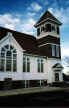
Memories of Church By Pat VanderPol/Farrah Dyk When a church is over 100 years old, its walls are filled with stories and memories that span generations. Whether the memories are of the way things used to be and have changed over time, or individual moments that helped shape a person’s faith story, one common theme is woven through them all: community. This building we have called our church home for so many years is filled with a community of believers spanning generations that have experienced life’s ups and downs with each other. The saying ‘if these walls could talk’ rings true as we reflect on all the memories created within these four walls. The early days of the church looked a little different then they do now. Offering plates were filled with pennies, nickels and dimes, which were often tied up in the corner of your handkerchief so you wouldn’t lose them. Little girls often had one good dress for church that they took off as soon as they got home. Elders and Deacons always sat in the first rows of benches on the southwest side and would stand during prayer. The minister did not have to wonder whether or not they agreed with his sermon because after the service he would shake their hands and if someone refused to shake his hand it meant they had an issue with his sermon. The bell has also been a long-standing staple of the church. It was always rung at 8 am, and again at 10 am on Sunday mornings. Church services were originally held in the morning and afternoon, with the afternoon service being in Dutch. The children were expected to be at the second service spoken in Dutch, even though they didn’t understand it. When first considering changing the afternoon service to evening, one member stated ‘the Bible says to keep the Sabbath Day holy, not the evening’, so it did not go through. It was later changed when the council unanimously decided to try it on a trial basis. For communion there used to be one common communion cup that was passed around for each person to take a sip from, something current members can hardly imagine doing! It was also noted that many of the men had long mustaches at that time. Before the modern convenience of air conditioning was added, the church tended to get a little hot in the summer. Many remember warm Sunday services with windows and doors open, fans roaring in the corners, and flies buzzing around. The bulletin often doubled as a fan to cool yourself. Arguably one of the hottest places in the sanctuary was the balcony. In the early days of the church the balcony was always full. The young men would sit in the back benches of the balcony, as evidenced by the grease spots from their heads left on the wall behind them. Some actually recall wanting to delay getting to church so they could sit in the balcony. In more recent years the balcony often found itself used by those families that were late in getting to church on days when services were full! Throughout the years the church community always came together to accomplish necessary updates and remodeling projects. Various projects throughout the years include shingling the church roof and steeple, stained glass window repairs, rebuilding the pipe organ, building steps for the pulpit, adding bathrooms to the basement (a big upgrade from the outdoor toilets), making a taller balcony railing for insurance purposes, painting and interior remodeling which required removal of the pews, and the new fellowship hall addition. No matter the task big or small, the church members came together to complete it. There are many things unique to this church building that will only live on in the memories of those who experienced it. Like the way the pews shake when someone in your bench gets the giggles, or those few pews that seem to squeak with every move you make. The noise a toy makes when it’s dropped and rolls all the way down to the front of church. Your children asking if they counted the organ pipes correctly and knowing exactly how many there are because you remember counting them when you were their age….yes, there are 39! The powerful way the organ seems to shake the dimly lit church on Good Friday, in contrast to the morning sun shining brightly through stained glass windows on Resurrection morning. Even though it is said that the church is the people not the building, each one of us hold memories in our hearts from within this building. Times of celebration like a marriage, profession of faith, or a new baby, as well as times of grief in saying goodbye to a loved one. Most importantly this building has been a place where for decades people have come to know Jesus as their Savior and have grown in their relationship with Him through pastors, teachers, and the prayers and encouragement of others. Life comes with many changes- may we go forward together as a community founded in faith and unity into this new chapter, depending on Jesus Christ as our Savior and guide! History of our Church Compiled by Paulette Veurink Our church is a story of God’s faithfulness to us as a church family. Ps. 119:90 states “Your faithfulness continues through all generations, you established the earth and it endures.” The first settlers to the Dakota Territory worshipped God in their homes. On April 25, 1883, the Douglas settlers sent a letter to Classis Iowa requesting to become an organized congregation. There were 22 families and 8 single members that joined this movement. On May 3, 1883, the first services were held at the C. VanDuyn home one mile south of the present site of New Holland. The congregation became “The New Holland Christian Reformed Church of Douglas Dakota Territory” On May 9, 1883 a congregational meeting was held to decide where to erect the church building. The original building was 32 feet by 32 feet and 14 feet high. A year later an additional 21 feet were added. The church and parsonage were built on the Stephen VanOtterloo farm and on January 1, 1884 five more acres were purchased to be used as a cemetery. In 1907, wings were added to either side of the church, due to more room being needed for the growing membership. A coal furnace and the first organ were installed in 1910. At a congregational meeting on December 3, 1918 the consistory brought a motion before the congregation to build a new church. It was decided to build a structure 76 feet by 56 feet with a small addition on the west side for the organ. According to the church minutes, G. Daverman from Grand Rapids, MI was hired as architect for $500 and Peter Kuipers from Detroit MI as the builder at 10% of all expenses. Farmers donated much time in the hauling of stones from their farms and sand from the Scholten and Likkel sandpits. The lumber was hauled from Plankinton where it arrived by rail. The cement hauled from Corsica. Most materials were hauled by horse and wagon and one small truck. Figures on the cost show the art glass cost $915, the pipe organ $3,300, light plant $2,100 including wiring and fixtures. The furnace came to $880, church furniture was $2,900 and the bell about $425. The young people's society raised the money for the bell and hauled it from Corsica. Cost of the entire church was approximately $43,000. The roof of the building is self supporting. Five heavy arches spanning 56 feet to support it. They were assembled on the ground. They were raised into place by Henry VanderPol SR, the house mover. The new building was dedicated on August 26, 1920. In 1921 the congregation reached its largest membership 775 souls; 140 families. In 1943 the mortgage for the church building was burned in front of the congregation. A tornado damaged the brick chimney and the chimney hit part of the south side of the church in 1947. In 1948, the church was reshingled, the interior was refinished with nu-wood tile blocks, and new light fixtures were installed costing $15,000. The next year the electricity to the church was received from the REA versus a local electric plant. Changes continued to the building with the basement being refinished and parking lot and street oiled in 1963. Steel doors were installed in 1980. The new parsonage was completed in 1981. The congregation numbered 118 families in 1982 A summary of the next improvements to the church building are – new siding in 1983 @ $30,000; organ refurbishing in 1984 @ $44,000 and a lift and connecting hall @ $20,000; in 1998 stained glass window repair @ $6,500, sanctuary repainted @ $15,000, carpet and tile replacement @ $12,000 and benches refinished @ $12,000; in 1999 new furnaces were installed and 2 years later an air conditioning unit added. The newest changes have been a fellowship hall and new kitchen added in 2014. The steeple was repaired and bell removed in 2017. The bell is now located in the front of the fellowship hall. The New Holland Christian Reformed Church at present has 69 families, 86 baptized and 188 professing members. There have been 1,368 baptisms since 1919, 428 professions of faith since 1961, numerous marriages and deaths. There have been many changes to the present building. Throughout the years the congregation itself has experienced many trying times: no crops, drought, 30’s depression, wars, illnesses, high interest rates, and tragic deaths. There have been enemies from outside and strife within. As our church journey started so it will continue with God’s faithfulness to all generations As Deuteronomy 7:9 says “Know therefore that the Lord your God is God, He is the faithful God, keeping His covenant love to a thousand generation of those who love Him and keep His commandments. |
|